
How many believers it has.
The gullibility of the person hearing the tale.
Mythology is only a part of religion (and often survives after the rest of the religion has withered away). Mythology is the stories that try to explain why the world is the way it is.
A living religion will also feature doctrines (a set of teachings, typically about morality, correct beliefs, prescribed or proscribed attitudes or sayings or practices) and rituals.
That makes more sense thanks
Follower size.
Mythology is the rules invoked to justify a religion.
I use this framing to explain how finance is the rules invoked to justify an economic model.
They’re both control mechanisms conjured by the ruling class to maintain class division, the newer incarnation just substituted smiting with accounting.
None really. Once active believers are gone its treated as mythology. Are they fall below a threshold where they can support the beuracracy of an organization.
Journey to the West
Nobody seriously believe in Sun Wu Kong actually exist lmfao
Most people will not kill others over, or lose their minds over mythology. Nutters of all kinds do exist though.
Speaking for myself, parts of my current “religion” (belief system) literally stems from what’s often referred to as “mythologies”, such as ancient Mesopotamian beliefs. I’d say this word is (wrongly, IMHO) used to describe any polytheistic belief system which existed in the past and are believed to hold no living devotees nowadays (which is also referred to as “dead religions”), except… It’s quite of a biased assumption, given how I myself worship goddesses such as Ereshkigal and the one who was initially known as Lilitu, Lilith (and I’m not even a Sumerian person).
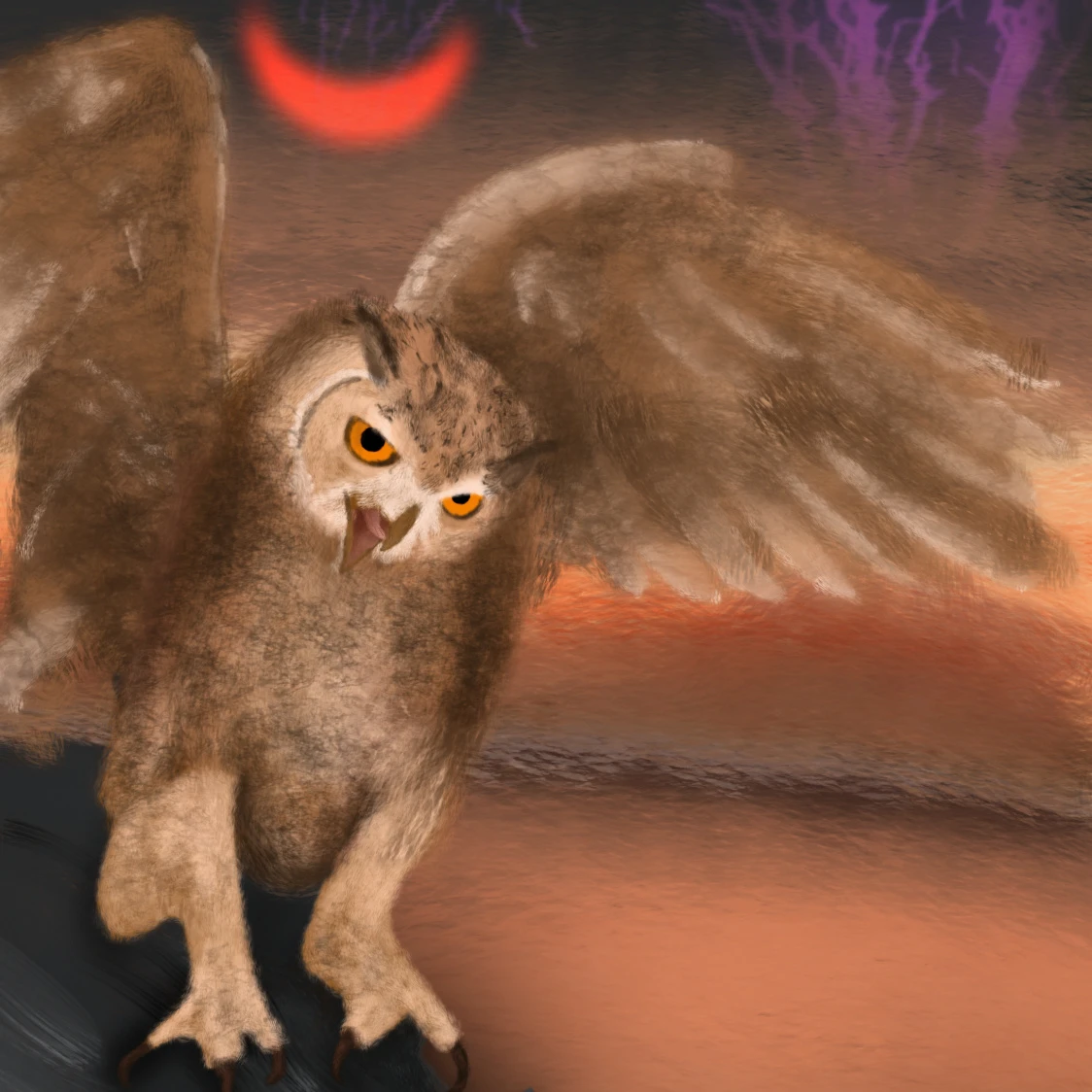
IMHO, there’s no such thing as a dead religion or dead language, if a random someone can try to revive the ancient system, even if idiosyncratically to ground their personal worldviews on something that was once well-established. By the way, there are many other modern attempts on reviving ancient religions such as Temple of Sumer (a religious organization trying to restore and bring awareness regarding Sumerian and other Near Eastern religions). I particularly don’t belong to any religious group (yet; sometimes I really long for one, as I used to belong to a Luciferian sect a few years ago before Lilith suddenly pulled me into Her burrowing-owl-y nest underground like the rabbit (cunicularia) pulled Alice into the Wonderland to meet the Queens), my belief system is quite of a temple of one human, with me being the devotee and the preacher to myself preaching about the Dark Mother Goddess, cosmic Queen of the Night.
Active practioners perhaps?
A religion is trying to save you.
A religion is trying to control you.
A religion is trying to
save you.convince you that you need saving and only they can do it.
Myth is stories. Religion is community.
The playbill is not the play. The script is not the actors. But everyone coming together, audience included, to take part in a production of theater is all of it.
I see myth and religion being connected like that.
Myth is fiction no one no longer believes. Religion is fiction that people still believe is real.
Your double negative is saying that mythology is something everyone believes.
Christian mythology is the Jesus was baptized, or transfigured, or died and was resurrected.
Christian religion is that you must be baptized, or be confirmed, or receive communion.
A mythology is a set of shared stories that define a culture—its values, its productive metaphors, its identity. They may or may not be believed in as actually true—even when they are, they’re generally understood to have occurred in a place and time distinct from the culture’s current reality.
But the point of a mythology is the relationship it establishes between community members, while the point of a religion is the relationship it purports to establish between its adherents and the divine.