
• 889 Posts
  • 236 Comments
Joined 9 months ago
cake
Cake day: November 10th, 2025

help-circle
  • The use of Yuan (and currencies other than USD) is still quite low as the article says.

    Would betting on Yuan be a good idea for Thailand?

    China would have an additional measure to pressure the government in Bangkok for whatever political or economic gains Beijing is aiming at, simply by devaluing (or appreciating) its currency.

    This is important as the bilateral trade between the two countries tells a story well known from many others of China’s trade partners: In 2025, Thailand’s exports to China reached almost USD 40 billion, while imports from China were significantly higher at USD 108 billion.

    Thailand’s deficit with China in 2025 - USD 68 billion - represents an increase by 50% year-on-year and ranks among the steepest annual widenings of all of China’s trade partners in the Asian region, second only to Malaysia’s 62% deficit increase and similar to Vietnam’s 40% jump.

    Maybe more importantly, Thailand’s trade deficit with China has grown every single year for the past five years.

    The devastating consequence of China’s export surge is industrial contraction. Thailand’s Kasikorn Research Center estimates that 4,300 Thai factories closed in the two years to 2025, spanning automotive, electronics, garments, furntiture, steel. The International Monetary Fund (IMF) has issued a forecast of 1.6% and the World Bank anticipates approximately 1.7% - the lowest growth rate for Thailand outside of crisis mode like the pandemic or the 2008 turmoils.

    If and when the Yuan gains ground in Thailand China-trade in a meaningful way, Bangkok risks its economy (and politics) to open up for more coercive tactics and exploitation by Beijing.


  • As it has long been reported, Indonesia’s over-reliance on China is a warning for other Global South countries,

    [A year ago, in June 2025], China imposed a 20% anti-dumping tariff on stainless steel from Indonesia … The penalty will remain in place for five years. But the real story isn’t the tariff. It’s the reckoning behind it: Indonesia is losing control of its most prized asset. And it has only itself to blame …

    The country may sit on the world’s largest nickel reserves, but China holds the value—and the power. That imbalance didn’t happen by accident. It was the result of weak governance, poor planning, and a political system too eager to please investors rather than protect national interests …

    The recent tariff from Beijing underscores just how exposed Jakarta has become. “The anti-dumping duty will erode the competitiveness of Indonesian products due to shrinking profit margins,” said Sudirman Widhy Hartono, chair of the Indonesian Mining Experts Association (Perhapi) …

    Around a quarter of Indonesia’s exports go to China (mainly commodities such as Nickel, mineral fuels, steel), and 36% of its imports come from China (machinery, electronic equipment, vehicles, plastics). Indonesia’s trade volume with China is higher than with the entire ASEAN.

    With more debt owed to China (the bond buyers are China-linked investors only), Indonesia’s dependence on China is likely set to rise, the island country’s industrial development about to slow down.

    Why? The article linked in this comment says it clear, using the Nickel industry as an example as Indonesia has the world’s largest nickel reserves:

    This isn’t the end stage of Indonesia’s nickel policy. It’s the middle. For all the talk of “downstreaming,” most of what Indonesia produces—nickel pig iron (NPI), ferronickel, and stainless steel billets—are still intermediate products. “They’re not the final products of nickel downstreaming,” Sudirman noted. “The domestic downstream industry is still not developed. Nearly all NPI and stainless steel is still exported abroad.”

    Why didn’t Indonesia develop those downstream industries? The answer, in part, is corruption.

    From sweetheart land deals to opaque tax incentives, many of the major industrial projects were fast-tracked with little transparency and minimal safeguards. Environmental and labor regulations were ignored. Licensing became transactional. Strategic decisions were too often made behind closed doors, benefiting a narrow circle of elites rather than the broader public.

    Chinese companies, predictably, capitalized. They responded to the incentives they were given—cheap land, tax holidays, and a compliant regulatory environment. They brought capital and technology, but on their terms. Indonesia never set the rules of the game. It simply played along …

    This bond will not cut dependence on the US dollar, it will increase dependence on China’s coercive policies, making Indonesia more vulnerable for Beijing’s coercion such as tariffs and other punishable trade measure.

    It’s almost funny that whenever the Florida man imposes tariffs, the media is full of (absolutely justified) critique. If China creates the same trade restrictions, the media is largely silent. As if it made any difference.











  • According to the survey linked in the article,

    one area where the U.S. still gets higher ratings than China has to do with personal freedoms: More say the U.S. government respects the personal freedoms of its people than say the same of the Chinese government.

    Pew Research did also a survey to find out how views of the U.S. and China compare specifcally in Latin America:

    • Views of China are now slightly more positive than views of the U.S., due largely to worsening views of the U.S.
    • People generally lack confidence in both Trump and Chinese President Xi Jinping to do the right thing regarding world affairs.
    • People are much more likely to say the U.S. interferes in the affairs of other countries than they are to say the same of China, but the two superpowers are seen in a fairly similar light when it comes to their reliability as a partner and contributions to global peace and stability.

    All in all it is a more balanced view and doesn’t serve the Chinese propaganda.

    What is absolutely missing in my humble opinion is how the U.S. and China compare to European countries, Australia, New Zealand, Canada, and all the other democracies. The choice between Donald Trump and Xi Jinping is just a bit like the choice between the plague and cholera. But that’s just my opinion, maybe I am mistaken.


  • According to the survey linked in the article,

    one area where the U.S. still gets higher ratings than China has to do with personal freedoms: More say the U.S. government respects the personal freedoms of its people than say the same of the Chinese government.

    Pew Research did also a survey to find out how views of the U.S. and China compare specifcally in Latin America:

    • Views of China are now slightly more positive than views of the U.S., due largely to worsening views of the U.S.
    • People generally lack confidence in both Trump and Chinese President Xi Jinping to do the right thing regarding world affairs.
    • People are much more likely to say the U.S. interferes in the affairs of other countries than they are to say the same of China, but the two superpowers are seen in a fairly similar light when it comes to their reliability as a partner and contributions to global peace and stability.

    All in all it is a more balanced view and doesn’t serve the Chinese propaganda.

    What is absolutely missing in my humble opinion is how the U.S. and China compare to European countries, Australia, New Zealand, Canada, and all the other democracies. The choice between Donald Trump and Xi Jinping is just a bit like the choice between the plague and cholera. But that’s just my opinion, maybe I am mistaken.

    [Edit typo.]


  • Just stumbled upon this report stating that China is reducing incentives for academics to submit papers to international journals over leak concerns, national security issue,

    The national security concerns have become a new factor in Beijing’s long-running campaign … China’s Ministry of State Security last month accused a researcher of leaking “important technical details” while trying to win acceptance of papers by international journals and academic conferences …

    China’s science policy has been shifting from emphasis on global collaboration and publication in international journals towards tighter controls on how knowledge is shared overseas. The change comes amid geopolitical tensions and the country’s rapid technological advance …

    China’s security ministry in June warned that submissions to international conferences, publications in foreign journals, cross-border academic exchanges and overseas collaborative research must all “strictly” follow the requirements of “review before public disclosure” and “approval before external release” …

    One Chinese scholar in materials science said he had stopped submitting research to foreign journals because it had become “difficult” to pass security reviews, which he said were “unclear and insufficiently objective” and part of a process that discouraged overseas publication … [Here is an archived version of the article.]

    So, again it is primarily China where knowledge is not free. Your argumentation in this thread can only be interpreted as an attempt to distract from illegal Chinese activities. Nothing what China does is about free knowledge, let alone for the benefit ‘of all of mankind,’ It’s rather the exact opposite.

    @[email protected]


  • This article is a good example of how China’s propaganda works. As one recent investigation has found,

    China’s goal [of its propaganda operations] is to build a positive image of itself. Freedom House describes this as a long-term strategy aimed at “telling China’s story well”. At its core is the image of China as a successful, trustworthy and indispensable partner.

    Oh, and the article is referencing to the U.S.-China Business Council, a researcher at Renmin University of China in Beijing, and Zhu Min, a Chinese economist and former deputy managing director of the International Monetary Fund who also held senior positions at the Bank of China and the People’s Bank of China.

    Such articles are pure propaganda.


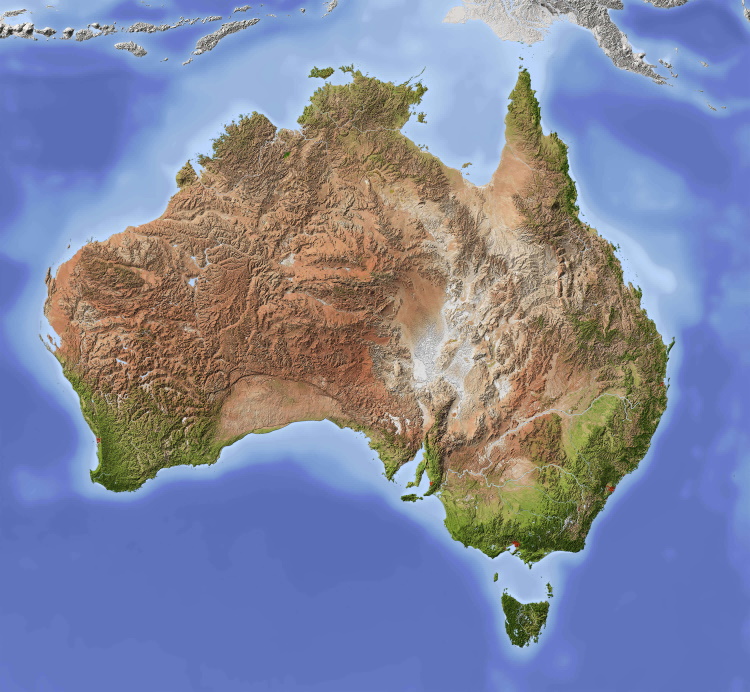
  • The Lowy Institute titles, “Australians now wary of both China and the US,”

    In 2026, Australians are … placing low levels of trust in both the United States and China.

    Trust in the United States to act responsibly in the world has fallen to 31%, the lowest level in the history of Lowy Institute polling. This new low represents a five-point drop from last year and a 25-point drop from 2024 …

    Trust in China to act responsibly in the world has risen eight points since last year to 28%, narrowing the gap with the United States to just three points. In 2022, that gap was 53 points …

    But the positive thing is:

    Australians place high levels of trust in liberal democracies and the United Nations.

    For the sixth year running, Japan is the most trusted power, with 89% of Australians saying they trust Japan to act responsibly in the world. Germany is the next most trusted power (83%), followed by the United Kingdom (81%). Seven in ten Australians (70%) say the United Nations is either ‘somewhat important’ or ‘very important’ to Australia’s national interests.

    For two of Australia’s key regional partners — Indonesia and India — trust remains steady if moderate. Trust in Indonesia to act responsibly in the world sits at 57%, similar to last year’s result. Australians’ trust in India fell four points from last year to 50%.

    Of the countries surveyed, Russia was once again the power least trusted by Australians with only 11% saying they trust Moscow to act responsibly in the world.