Honestly cos adults are scared to show wnimsy and a thirst for kmowledge, or have to pretend they knew about every cool thkng that is demonstrated in a science musem. And in arr museums, adukts will pretend to “get it” to impress their date whereas kids will usually not pretend to like a picture just to impress their parents.
Meanwhile in history museums everyone regardless of age can join together in agreement that ancient Egypt was cool as fuck
I think it is very hard to teach to a general audience at an intermediate level because that grey area between noobs and experts is so vast.
I have had a lot of interests I’ve tried to learn about on my own, and it is usually pretty easy to start out from nothing, since everything you get exposed to is new, and you feel an immediate acquisition of knowledge or skill.
Then at the expert level, you’re interacting with people that should all have a high level of existing knowledge, and you don’t need to worry about the audience coming into a presentation with wildly different degrees of understanding.
For a place like a museum that is usually designed to cater to a general audience, keeping things simple is simply going to appeal to a larger potential group of people. This is something I can lose sight of myself in talking with people about subjects I enjoy. They either aren’t into it as much as I am and can only stay engaged so long, or I need to do a lot of talking to find out where their current level of experience is before I can start really elaborating.
If you can find staff that is willing to be engaged at a museum or whatever place you may be at, talking with them can really help you get a lot more out of things, whether that is to ELI5 or to go deeper into the subject. I’ve had people be able to explain different things to me in art museums or historical reenactments, and I’ve talked to lots of zookeepers and rehab workers to learn more about their captive breeding programs, animals that may not be currently out for display, training and education programs, or about various laws and regulations when working with animals that would bore 99% of a general audience. I love when people ask me about things at work or at events, because there are usually so few people that actually want me to really talk about some of the specialized things I know! Most people working these places will have a passion for what they are doing and may really appreciate having someone to share that with.
Good observation. I think people who build museums are generally closer to Science than Art (or even just the adult population in general).
I wanna go to an art museum that lets me touch and play with the art the way a science museum lets me touch and play with the science.
Many art museums have recorded guides for kids. The one I went to the other day also gave kids the opportunity to paint their own paintings based on subjects (skulls, vases, fruit etc) the painter of the main exhibition (Césanne) used.
Because they are….
Suer both may have aspects that appeal to the non primary age group but science museums are for kids and art museums aer for adults.
I am being literal about the term Science Museums.
The museum of Natural History is a museum about Science but it is not a science museum.
To save the parents the embarrassment of having to explain something they don’t understand.
Don’t get me wrong, art can be just as awkward to explain but it is socially acceptable to chalk things you don’t understand to the artist’s creative whim
My local nature and science museum is dumbing everything down by eliminating the need to read and make everything interactive. All the cool walk through exhibits are becoming interactive displays and games. :(
Where’s the problem? It makes learning much more approachable and interesting.
If I want to read, I can just stay at home and read on the Internet.
I can read way faster than I can listen to a narrated video or whatever, and I can easily split my attention without losing my place in the information.
Because adult science is complex and dull to people outside the field.
How do we know the makeup of the atmosphere of a planet in another solar system? That line on a graph is higher then the other one
Nah, astronomical spectroscopy is cool as hell and it’s really easy to have simplified examples you can fiddle with. At its most basic you’re using a prism to divide the sun’s light and measuring the visible bands. (This is pretty much how infrared light was discovered in 1800!)
There’s nothing dull about seeing a spectrograph working.
Edit: also, how come you can’t find a real hologram displayed in a museum?

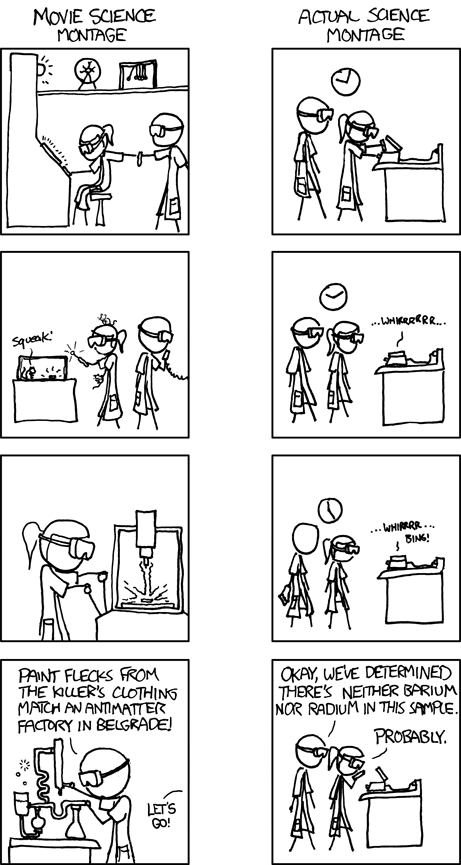
Watching a beige box seems kind of dull.
Did scientists figure out how to keep the beige box from turning into a yellow box?
Don’t expose it to UV or excessive heat.
Also, the process is somewhat reversible: Retrobright
However:
The long-term effectiveness of these techniques is unclear. Some have discovered the yellowing reappears, and there are concerns that the process weakens and only bleaches the already damaged plastic.
Yeah retrobright is… Basically only a reasonable option if you want things to look good for gathering footage, it’ll go back to looking like shit within a year or two.
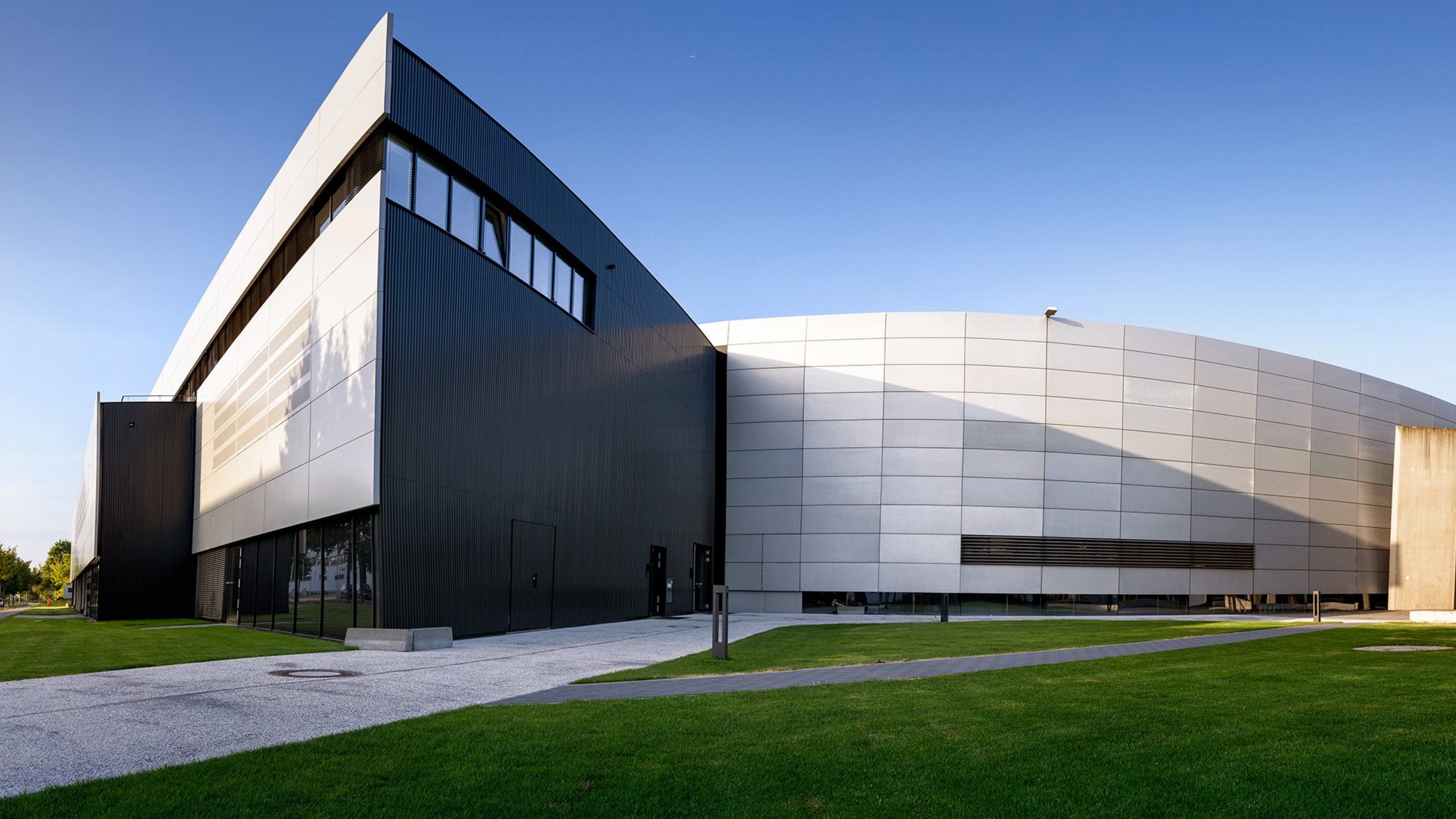
I stood inside the grey box where the magic happens. It was not dull because there was a physicists explaining everything.
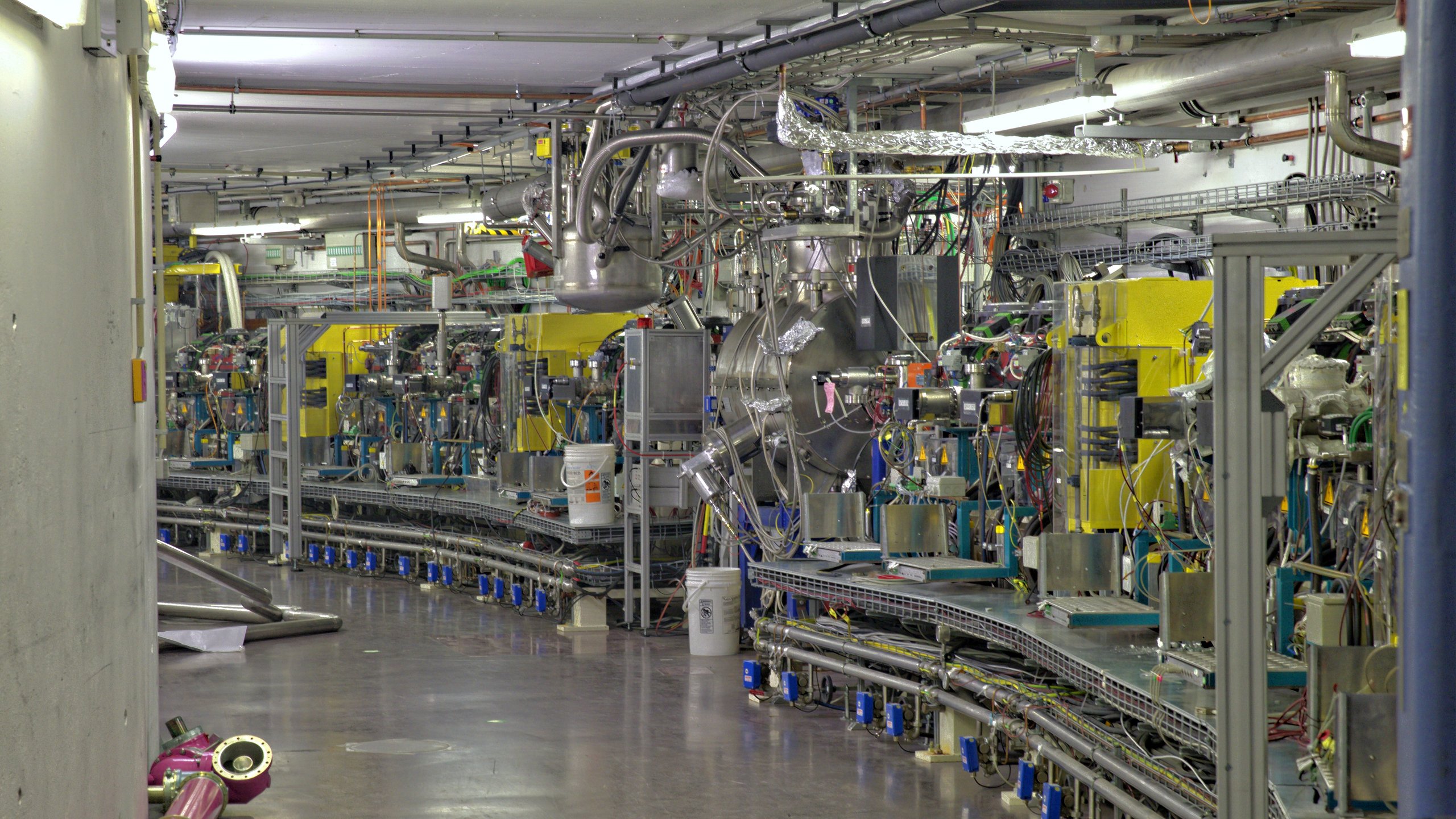
That’s a big box.
EDIT: I like the high tech foil.

Make the box transparent.
But seriously, all of those have older versions that don’t work as well but look absolutely cool.
If you’re gonna make it transparent, make it out of this:

Idk, that seems like that’d be interesting…
I am Autistic though
By a show of hands, how many here are autistic? Upvote = Yes, Downvote =No.
What if you aren’t convinced one way or the other?
They can upvote your comment! It’s branching binaries, all the way down, until we reach enough possibilities!!
Or diagnosed?
…or mildly so. It’s an imperfect system with no fractional voting. It’s our burden to bare.
Upvote = Yes, Downvote = Yes, but in denial
Well, statistically the individuals most likely to frequent an alternative social media platform are those with a) the technical proficiency to do so, b) Weak social anchoring to the network effects of mainstream platforms, and/or b) people whose past social interactions have led them to no longer have access to those platforms, ergo by self-selection bias there’s a high probability of finding other high functioning individuals on the spectrum on this platform. Lemmy/Piefed’s primary use case is basically socially-awkward-networking.
Is that why I seem to fit in so well here? I was just beginning to think I finally learned how to be normal…
Well, you ARE normal! With the right people!
– Frost
Better question: how many have declared themselves autistic or even understand the DSM definition?
Is it fashionable? Or just more common than we think?
So are a lot of scientists.
Ditto
Pretty much.
I find that the hierarchy of evidence combined with the ability to critique research is the foundation upon which sits pretty much all of my opinions. It’s a shame kids aren’t taught this from a young age; it would make manipulating them as adults so much harder.
Once you realise the strength of the peer review process, you realise that most peoples opinions dont actually matter: we have strong research on that.
Once you realise the strength of the peer review process, you realise that most peoples opinions dont actually matter: we have strong research on that.
We also have research on people ignoring peer reviewed data in favour of random facts from random sources.
We also have research on people ignoring peer reviewed data in favour of random facts from random sources.
Says who?
Any study with a placebo or nocebo element.
kids aren’t taught that at a young age because they can’t grasp it at a young age.
and frankly, most adults can’t either. it’s too abstract for them.
our ability to understand abstract concepts like scientific method begin at age 12. that’s why you start doing science experiments in class in junior high.
But there’s a third option. There’s a difference between complete absence of this topic in the curriculum, and simplified versions of it that increase in difficulty with capability. Mirroring other stages of educational development.
At the moment there’s a complete absence. At least in any country I’m aware of. Until late high school level which is way too late.
Young kds understand hierarchies. Social hierarchies start to form on the first day of kindergarten.
Teaching an 8 year old that science research sits at the top of a pyramid and newspapers and TV sitd at the bottom, would be easy to grasp. There’s nothing stopping us removing the detail and teaching a simplified structure that can then be built upon in subsequent years.
Edit: in regards to your edit, I was taught a simplified scientific method from age 8, not 12.
Teaching an 8 year old that science research sits at the top of a pyramid and newspapers and TV sitd at the bottom, would be easy to grasp.
you have never been around children, have you?
If kid is capable of understanding basic scientific method at 8 years old, they can understand the basic structure of a hierarchy.
“X is more important than Y”
“Why sir”
“Because X uses the scientific method like we discussed in class last week and Y does not”
“What’s the scientific method again sir”
repeats for retention
that’s not how kids work. nor do most people.
Okay. I don’t agree with you, but that’s fine. We can disagree.

Just like most any difficult work that results mostly in knowledge, it takes self-satisfaction to get the “rewarding” part.
I somewhat agree, that looking purely at the data would be boring, especially when it’s on a topic too complex to understand. However, I think science content creators prove it doesn’t have to be boring. However, they’re usually making content on specific topics. A science museum is trying to touch everything.
Most art is referencing social and historical contexts that kids might not be aware of yet. Most science museums are geared toward teaching scientific principles that kids are also less likely to be aware of. So art museums build on previous knowledge, while science museums supply knowledge to those who don’t yet have it.
Science museums are FUN because the experience is the purpose: teach people scientific principles or exhibit the (progressive) history of science.
Art museums have different purposes: historical theses, expression, cultural development, discussion, drinking, or money laundering.
It makes some sense: science museums are educational focused, art museums are about very boring things that adults enjoy but kids might not.
I think most children aren’t very interested in most art that isn’t made specifically for children.
Science meanwhile, there are a lot of ways to make that interesting to many children, with interactive elements and such.
My fave science museum is the DaVinci Museum in Milano. It not as kiddie as the others, and my teenage kids actually enjoyed it as much as I did.
Maybe it’s halfway between an art museum and a science museum because DaVinci was kinda split that way too.
I loved the DaVinci Museum! Second to the ADI design museum, but I’m a bit of a design nerd.
I hadn’t realized the extent of his hand in essentially the existence of Milan. It’s definitely one of the best non kiddie science museums I’ve been to. The Fernbank in Atlanta is increasingly kiddie inside but out back they have an extensive forest of native plants which is super cool. They do adult nights sometimes but I think thats just adults getting drunk and doing kid stuff.
Some of the most impactful demonstrations of science are hands-on activities. After all, any sufficiently advanced science starts to look like magic, and a major objective of science museums is to disabuse people of that notion. That these demos seem to be child-oriented is simply a result of not assuming any background knowledge of the topic. But even adults might not know how a tumbler lock works, or that electricity follows all paths in inverse proportion to resistance. If something is rooted in natural phenomena, age is not a prerequisite to understanding.
As an adult, I personally enjoy science museums precisely because they’re the polar opposite of technical papers and textbooks: an accessible and chill mood to learn about stuff I’ve seen but never paid much attention to. I’m not so vain to think that I can’t learn something from a museum visit. In some sense, adults going to science museum is akin to edutainment, the genre on YouTube. Some might also call it “adult learning” or “continuing education”, but whatever it is, it’s enriching for individuals and families alike.
because in the science museum they have a lot of touch/interactive exhibits. museums, don’t.